
Unscripted · Issue #1
Stop Trying to Sound Smart
Why advisors who try to sound smart lose trust
Originally published in Unscripted on LinkedIn.
Trust doesn't come from having every answer. It comes from understanding the other person. This week: spend the first 10 minutes of one important conversation asking, not telling.
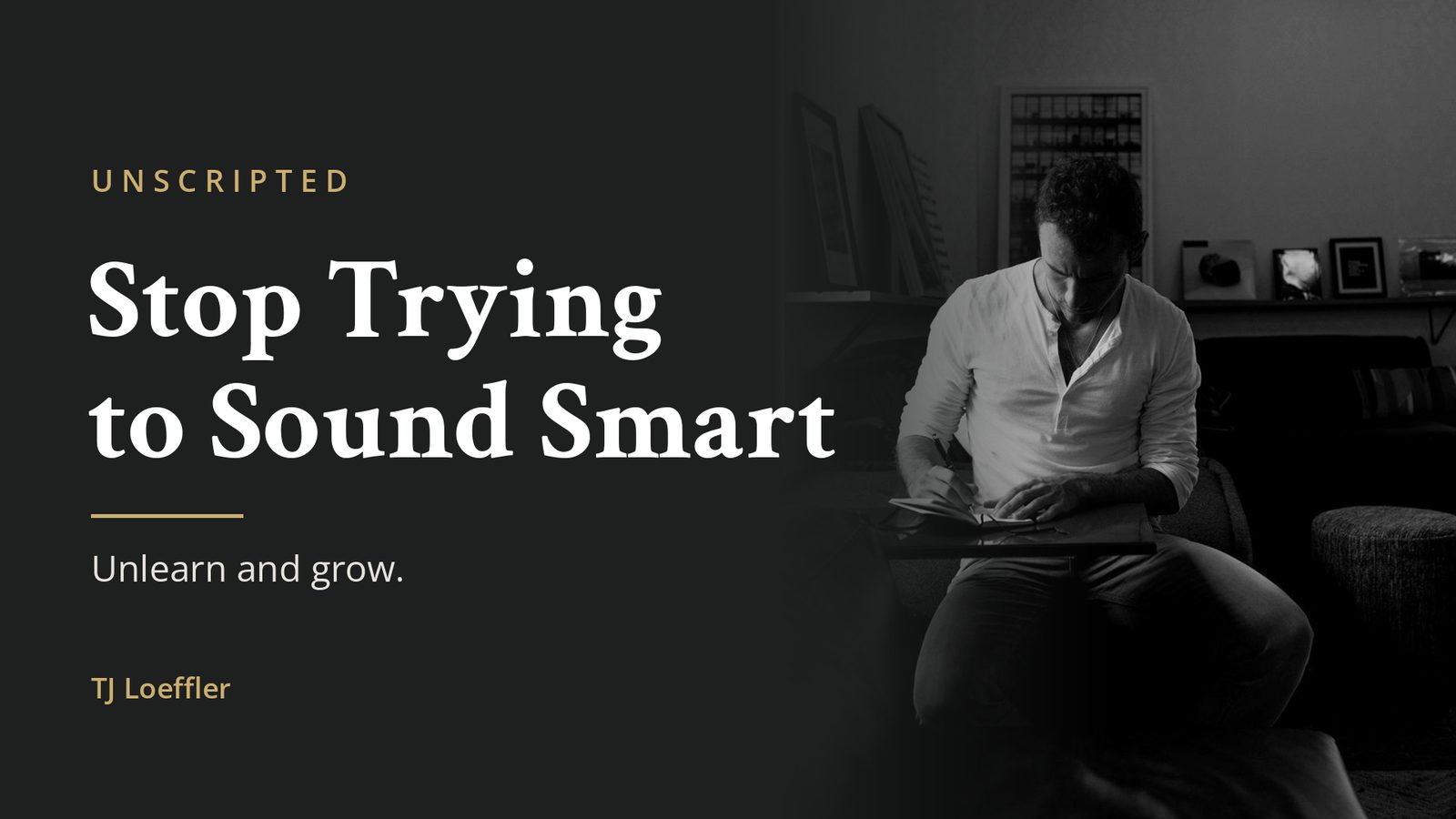
Early in my Wall Street career, and even in my first years as a private coach, I walked into every important conversation ready to prove myself. Every answer loaded. Every opinion on command.
I left those conversations feeling sharp. The other person left feeling talked at.
What I had to unlearn: being the smartest person in the room isn't the goal. Understanding the other person is.
It shows up everywhere. The advisor in a first meeting with a prospect. The owner across from a key hire. The leader in a tense team meeting. Even at the dinner table, when someone you love just needs you to listen.
Smart is common. Curiosity stands out. People connect with the person who understood them, not the one who impressed them.
This week, try this: Pick one important conversation. For the first 10 minutes, ask instead of tell:
- What's really on your mind with this?
- What have you already tried?
- What would a great outcome look like for you?
Then stay quiet longer than feels comfortable.
A confession: Some might say I've gone too far with staying quiet. My clients know me for long periods of silence during our coaching conversations. But with more than 15,000 hours and 10+ years of experience at this, I've found some of the most profound insight comes from those quiet moments.
Silence isn't an empty hole. It's a treasure box where people find their own answers.
If this lands for you, you may also find these useful: how to separate your identity from your work and why success can still feel empty.
Unscripted,
TJ
Common questions
Why do advisors who try to sound smart lose trust?
Being the smartest person in the room isn't the goal. Understanding the other person is. People connect with the person who understood them, not the one who impressed them. Smart is common. Curiosity stands out.
What should I ask in the first 10 minutes of an important conversation?
Ask instead of tell: What's really on your mind with this? What have you already tried? What would a great outcome look like for you? Then stay quiet longer than feels comfortable.
Why does silence matter in coaching and sales conversations?
Silence isn't an empty hole. It's a treasure box where people find their own answers. Some of the most profound insight comes from those quiet moments.

Private coach for financial advisors and high achievers. A little over three years at Goldman Sachs, then 10+ years and 15,000+ hours of coaching conversations. Faith-based, mindset first.
More about TJ → · LinkedInFind what's keeping you stuck
The Stall Scorecard is a short quiz that shows the pattern holding you back, then points you to the free e-book Welcome to Yourself.
Take the Stall Scorecard